TL; DR: in which I drink too much wine and try to comprehend why Star Wars is my life now.
The person who looks outward dreams, the person who looks inward awakens. – Carl Jung
I wasn’t really expecting to have a visceral or emotional attachment to The Force Awakens.
I had hope, which is what all fans have even when they’ve over-familiarized themselves with the basic plot beats beforehand (major character deaths included). I’m an unrepentant spoiler-philiac. I knew what I was going to see. But I don’t think I could have ever anticipated what I saw, a fact which I have taken a month and half to process and the reason I am rambling on it now.
Classic reylo meta paralleling the protagonists of The Force Awakens to characters from the Hades and Persephone myth (and not always in the way you think).
Pioneer work done in the early days of the reylo fandom and still as relevant as back then.
“Who is that man? The one staring at us? The nasty dog… He looks like he knows what I look like without my shimmy.” – Scarlett O’Hara about her first encounter with Rhett Butler, Gone With the Wind (1940).
Female protagonists have been paired romantically with “mad, bad, and dangerous to know” types since the beginning of and long before the advent of cinema. Although of chagrin to many “nice men” and socially concerned women, this ancient trope speaks to female desire as well as the deeply ingrained cultural idea that female sexual desire is dangerous. Ergo, the male character becomes an outward expression of that danger. For women who have been raised to fear their sexuality, the dangerous and seductive male character is a safe way in which to act out “dangerous” sexual desire. Next, the villain or antihero represents challenge and acts as a foil for personal growth and exploration within the heroine. Last, the villain/antihero is defeated and either banished or his inappropriate masculine power replaced with appropriate masculine power; this serves as a device for female empowerment. In this essay I shall support these assertions by drawing parallels between two modern fantasy movies. The first, 1986’s Labyrinth, features an overt heroine-villain romantic interest and the second, 2015’s Star Wars: The Force Awakens (hereafter referred to as The Force Awakens), features a foreshadowed heroine-villain turned antihero romantic arc. I shall also draw from psychology and classic literary and mythological tropes to bolster my examples.
Section I: The Maiden and the Frightening Unknown
We are often first introduced to our heroine, the young maiden who is presented in a childlike state, her sexuality unawakened. In Labyrinth, we meet Sarah who still plays with her “toys and costumes”. In The Force Awakens we meet Rey who, although living a difficult life on the brink of starvation, still retains a childlike quality in wearing a rebel pilot helmet and keeping a rebel pilot doll.
Sarah:
Rey:
Most notably, both heroines are presented as young and inexperienced females who become frightened when the consequence of their action calls them to their hero’s journey.
Section II: Into the Woods and Spirited Away
In Labyrinth, Sarah wishes her baby brother, symbolic of her own childhood, away to the Goblin King and is frightened by the aftermath of goblins scampering about her parents’ bedroom (an apropos setting as adult sexuality would be frightening to childlike Sarah), popping in and out of drawers and out from under the bed. Thunder and lightening crash. After Jareth appears he spirits her away to his labyrinth, which is both surrounded and permeated by a glittering autumnal forest.
In The Force Awakens, Rey is called by the Skywalker legacy lightsaber. Touching the lightsaber induces a frightening vision in which she encounters the masked Kylo Ren. After the vision, the Wise Old Woman of the story, Maz Kanata, tells her that the belonging she seeks is not in whomever she is waiting for (her family) but ahead of her. Wanting nothing to do with her apparent destiny, she runs down the steps of Maz’s Castle into a forest where her next encounter with Kylo further frightens her. In her vision, Kylo appears twice as a masked man with a raised lightsaber (more on this in Section IV), the second appearance taking place in the snowy forest of Starkiller Base. When Rey actually encounters Kylo in the Takodana forest, he bridal carries her across the threshold of his ship and spirits her away to the underworld of Starkiller Base. (By the way, the bridal carry of a young woman by a monster or young man, and Kylo/Ben is both, means one of two things in stage: a villainous crush or foreshadowing romance, either immediate or distant future. I leave it to you to imply the narrative direction this trilogy is going.)
In fairy tales and mythology, Dark Forests or Enchanted Forests carry multiple meanings, among which are sexuality, the subconscious, mystery, and our primal selves. Most importantly, the forest represents a rite of passage. Red Riding Hood meets and defeats the Big Bad Wolf in the forest. Rama takes refuge in the forest for fourteen years before rescuing Sita. Snow White becomes lost and is eventually awoken with the Kiss of Life in the forest. Beauty chases her lost father into the forest only to find the Beast. Thus, into the forest Sarah and Rey go, for it is here where they must encounter their Shadow, Dark Side, or Subconscious and shine Light on it so that they can transform from childhood to adulthood, from unawakened to awakened.
Section III: Temptation Presents Itself or Enter Boy Trouble
In every hero’s journey, something or someone who turns the hero’s world upside down must enter the picture in order for the hero to develop. This is no different for our female protagonists, whose worlds are upturned by the arrival of the tempting male antagonist. Enter Boy Trouble.
Needless to say, there appear to be some commonalities in presentation. Both Jareth the Goblin King and Kylo Ren/Ben Organa-Solo wear black clothing, have sharp, angular features, and appear to spend an inordinate amount of time on hair maintenance. In personality, Jareth and Kylo are haughty, intelligent, and display dry or deadpan senses of humor. They are both magic (Force) users, men of power, and royalty with Jareth being King of the Goblins and Kylo being the son of Princess Leia Organa.
Most importantly, their initial shots serve to establish that the female protagonist is physically attracted to her dangerous but alluring antagonist. During their presenting shots, both men’s features are sexualized using make-up and and lighting, their less flattering features deemphasized, and both men are presented at flattering angles (for Kylo, this initial unmasking is arguably his most attractive shot in the film, followed closely by his close-ups with Rey during their lightsaber duel). Note both heroines appear taken aback and enchanted by their antagonists. Rey even gives Kylo “elevator eyes”, then pointedly looks away when he approaches, stealing not one but two glances back at him.
Sarah’s reaction to the appearance of the Goblin King:
Rey is captivated as Han Solo tells of “one boy” who destroyed Luke’s new generation of Jedi:
Rey’s reaction to Kylo’s unmasking:
The following point will be covered more in depth in Section IV, but it is appropriate to note in this section that during both initial presentations, serpent symbolism is employed. Jareth throws a snake at Sarah and when Kylo unmasks we hear a snake hiss and rattle. The serpent is an ancient trope; in the Garden of Eden the snake tempted Eve with the apple from the Tree of Knowledge. Snakes represent phallic imagery, deception, and temptation; all three ideas apply although Kylo’s deception (that he is a man rather than a creature) is only a deception from Rey’s perspective. (Without wading too deeply into the weeds here, the film strongly suggests Ben Organa-Solo is not a monster and has a forthcoming redemption arc.)
In addition, each antagonist is also a Death or Hades figure (Please make time to read Death and the Maiden by @ohtze for in-depth analysis). Jareth and Kylo, dressed in black and sweeping Sarah and Rey away to their respective representations of the Underworld, the Underground and Starkiller Base, represent the death of childhood innocence and the rebirth of mature sexuality.
Jareth spirits Sarah away to the Underground:
Kylo (Hades) bears Rey (Persephone) away to the depths of Starkiller Base (the Underworld) on his ship (chariot) led by four TIE fighters (horses):
Finally, both antagonists serve as empathetic foils for their respective heroine’s character development. Both antagonists have similarities with the heroine. Sarah is an intelligent bookworm; Jareth is witty and intelligent. Rey and Kylo engage in what has been affectionately dubbed by fans as The Nerd-Off, a subtle battle of wits that takes place during her interrogation. Rey begins reciting droid specifications and Kylo cuts her off, saying he needs a map it is carrying and going into unnecessary detail about having put together all the other pieces of the map by recovering them from the archives of the Empire. That’s right, One Boy just told What Girl he spends all his time in archives as a point of pride. In the novelization, he also lets her know that he too knows about general droid specifications (thank you very much). Mirror mirror on the wall, who’s the nerdiest of them all? Both antagonists also relate to the heroine’s loneliness and isolation. The Goblin King sings to Sarah lyrics such as “the lost and the lonely”, “there’s such a sad love deep in your eyes”, and “live without your sunlight, love without your heartbeat”. As Kylo reads Rey’s mind, his tone is soft and empathetic. “You’re so lonely. So afraid to leave. At night, desperate to sleep, you imagine an ocean. I see it. I see the island.”
Each protagonist and antagonist pair is presented as two sides of the same coin. While Sarah’s development lies in realizing that the world is not fair, a fact the Goblin King does not fail to remind her of on several occasions, Jareth too displays a haughty, entitled attitude. Kylo/Ben and Rey are presented in a more Yin and Yang manner. Kylo is typically shown as a rage-filled, selfish character (tantrum throwing and ultimately choosing to kill his father) with moments of compassion (letting Finn off the hook in the opening scene and attempting to interrogate Rey first in a non-invasive manner then empathizing with her loneliness and isolation). Rey is typically shown as a compassionate character (choosing BB-8’s well being over more food rations than she has likely ever seen before) with moments of sheer rage (slashing Kylo’s face after she has already disarmed him). In the case of Kylo/Ben, we can presume that Rey will also serve as a foil for his character development as he makes the transformation from Kylo Ren back to Ben Organa-Solo.
Section IV: Sometimes a Lightsaber Isn’t Just a Lightsaber
Remember that part in Harry Potter and the Goblet of Fire that talks about the champions’ wands being flexible or rigid and whose wand was which length? Did you giggle at it? If so, then you did exactly what the author intended. Phallic imagery is purposely placed in literature and films, especially coming of age fantasies, as a signifier of potency, whether sexual or otherwise. Phallic imagery abounds in both Labyrinth and The Force Awakens. The following represent some of the phallic imagery present within both films.
Jareth warns Sarah, “Don’t defy me” then throws a snake at her:
Jareth and his cane:
Let’s not forget Jareth’s pants magic pants:
Hasn’t anyone told Kylo it’s bad manners to put your lightsaber in a stranger’s face?
I’m so not even kidding about this one. Check out the “tip” of his index finger. There you go. Now you can’t unsee it:
Note the positioning of the lightsaber as Kylo approaches the “girl he’s heard so much about”:
Thanks, Wedge. Monster, indeed.
Section V: Female Sexuality Awakens
Sarah is pulled into the Labyrinth’s world of sexual awakening when she summons Jareth, who shows up in the window of her parents’ bedroom. Jareth tells her he has brought her a gift. “It’s a crystal, nothing more. But if you turn it this way, look into it, it will show you your dreams.” Later in the film, Jareth sends her just such a crystal, which transports her to a highly sexualized ballroom with adult men and women wearing phallic masks (check out the horns and noses). She is the only character wearing white, symbolic of purity and virginity. After stumbling around the room, startled by the lascivious behavior she sees, she encounters Jareth who sweeps her in for a “dance” while singing to her, “As the pain sweeps through makes no sense for you. Every thrill is gone, wasn’t too much fun at all. But I’ll be there for you as the world falls down”. A song about the loss of virginity if I ever heard one. However, catching sight of a clock, she realizes she is running out of time to save her baby brother (innocence) and smashes a mirror, shattering the illusion.
Rey and Kylo engage in their own “dance”, during which the most transparent veiled pick-up line in cinematic history (aside from “Forget about your innocence the baby” of course) occurs when Kylo tells Rey, “You need a teacher. I can show you the ways of the Force.” First, “You need a teacher” is an established trope both in cinema/literature and real life for initiating romance. Men like to teach women of interest activities, whether driving a manual transmission or playing video games, as an evolutionary mechanism of showing fitness to mate. It’s a way of saying, “Look at all the skills I know and can show you. You should mate with me because you can count on me for survival skills.” (Yes, I’m aware of the not so feminist implications of this. I didn’t write the evolutionary handbook; I’m just its messenger.) Next, long time Star Wars fans will recall that typically when a Dark Side user is speaking about the Force or trying to recruit new members, some variation of “the power of the Dark Side” is used. Even Kylo, earlier in the film, tells Lor San Tekka, “I’ll show you the Dark Side”. There is a reason Kylo’s proposition to Rey is phrased “ways of the Force”. Read: Ways of the world, a euphemism for sex. Smooth, buddy. Smooth. However, based on the close-up shots that follow, it just might have worked.
Ladies and gentlemen, I give you the first non-sex sex scene in a Lucasfilm production. These shots are in order, so I’d just like to point out that as Rey’s face goes from struggle and concentration to loving it, Kylo’s goes from “I think I love this woman” to “Oh, let me help you find that Force” to “Yeah, you take it”. Something tells me it’s not just the Force that awakened in Rey.
Section VI: Confrontations and Female Empowerment
In Labyrinth, Sarah and Jareth’s final showdown occurs on the remaining piece of the Escher room, a room symbolic of confusion. In the Escher room, where Sarah haphazardly chases her baby brother Toby every which way on stairs that lead senseless directions, we get a glimpse of Jareth’s rather sad perspective, one in which he is not the villain of the story but a man (or supernatural being) attempting to live up to a girl’s unrealistic expectations of him. “You starve and near exhaust me. Everything I’ve done I’ve done for you,” he sings. When the Escher room crumbles only Sarah and Jareth remain standing on its remaining piece. It is here that Sarah at last displays the clarity and wisdom to take down her alluring foe. Jareth tells her, “Just fear me, love me, do as I say and I will be your slave.” Sarah defeats him by proclaiming, “You have no power over me.” This sexual awakening was Sarah’s fantasy and Sarah’s story to begin with; she needed only claim it.
In The Force Awakens, Rey defeats Kylo Ren at his own game not once but twice. The first instance occurs during her interrogation when Kylo is attempting to read her mind in order to extract the map to Luke Skywalker. As he attempts to push into her mind, she turns his game around and pushes back into his, revealing his greatest fear, that he will never be as strong as Darth Vader, emasculating him and leaving him shaking as he bolts from the room.
Kylo’s second defeat occurs during their lightsaber duel on Starkiller Base. After “finding the Force together” Rey launches an understandably vicious attack against Kylo, leading to a grappling match in which the blue legacy lightsaber is raised victoriously aloft via Kylo raising Rey’s wrist while Rey grips Kylo’s wrist and pummels his red crossguard saber into the earth, a symbol for female fertility. After the red blade is extinguished, Rey forces Kylo to the ground, emasculated and spent.
Rey uses Ben Organa-Solo’s lightsaber to defeat Kylo Ren and extinguish his. (Repeat that last sentence aloud, then report back on the symbolism):
Kylo Ren, his lightsaber extinguished in the ground, marked and spent:
Notably, after Kylo is disarmed Rey slashes his face. Why scar him in this way? Remember that snake noise when Kylo unmasked? Kylo unmasking caught Rey off-guard, both from an attraction standpoint and in making her think there was more beneath the mask than just a “creature” or “monster”. Likely feeling angry at both Kylo and herself for falling for what she perceives as trickery when he kills his father, Rey fixes the issue by slashing the tempting snake’s pretty face. Ironically, males with scars, particularly facial scars, are perceived as more attractive because evolutionarily this indicates a surviving alpha male and thus signals desirable genes. While our rational brain may say, “Yeah, but that’s the scar Rey gave him after she kicked his butt” our hindbrain (and Rey’s) still says, “Oo a scar – now those are some genes I’d like to pass on”. In attempting to disfigure Kylo so that he is no longer a temptation, Rey makes him even more irresistible for future encounters.
A key difference exists between the ending of Labyrinth and The Force Awakens. Whereas Labyrinth was meant as a single movie and ends with the heroine defeating the villain, The Force Awakens was meant as part one of a trilogy, with strong narrative hints toward a future romance between the villain antihero and heroine. In the first story of female sexual awakening we are presented with an adolescent girl who is leaving childhood, encounters a physical manifestation of her own unrealistic and problematic expectations of male sexuality, and defeats this antagonist by reclaiming her power. In the second tale we are presented with a young woman who is leaving childhood, encounters a dangerous masked antagonist who is revealed to be a handsome but dark young man, defeats him by twice emasculating him, and is foreshadowed to have future romantic encounters with him, presumably as Ben Organa-Solo, the rightful heir of the Skywalker legacy lightsaber, the symbol of the Light Side and appropriate use of masculine power.
Section VII: Conclusion
The heroine-villain/antihero trope serves several functions in Labyrinth and The Force Awakens. First, this trope allows for safe exploration of female sexuality with males women are evolutionarily primed to be attracted to, often considered dangerous territory and “not supposed to’s” according to social mores. Next, the villain or antihero represents challenge and acts as a foil for personal growth and exploration within the heroine. Finally, the conquering of the dangerous male, either by defeat and removal of presence or by replacement of inappropriate masculine power with appropriate masculine power, serves as a device of female empowerment.
Classic reylo meta highlighting the parallels between two of my favourite movies. It also gives excellent and very clear explanations why the sexy villain is so fascinating. Highly recommended.
So when I went to the theater and saw The Force Awakens for the first time, I was excited, but not too
much. I was expecting lightsabers, desert planets and unrealistic space
battles, but beyond that my expectations were tempered. My mindset was
basically “so long as it’s not as bad as The Prequels, I’ll consider it a success,”
and TFA definitely was. But – and
this is a big but – it was more than that, too. The longer I watched the movie
– the longer I watched Kylo and Rey interact – the more excited I became. I
could barely sit still. All I could think was oh my god. Oh my god, they’re Bastila and Revan. They’re the same.
There’s so many similarities between the two there’s no way this echoing was not intentional.
What follows is an essay-length, in-depth, somewhat
disjointed comparison between the two, as I try to order my thoughts. It’s
actually a continuation of this thread. Major, major spoilers after the jump, for KotOR and TFA and the Expanded Universe (seriously, don’t click past the jump if you
want to keep one or the other a surprise – I basically spoil everything). I’ll
be focusing primarily on KotOR I, because that’s the equivalent of where Kylo
and Rey are in terms of character development, but there will be a bit of KotOR
II in this as well.
This is the
second and (probably) last part or my essay “The Force Awakens and Fairytales”.
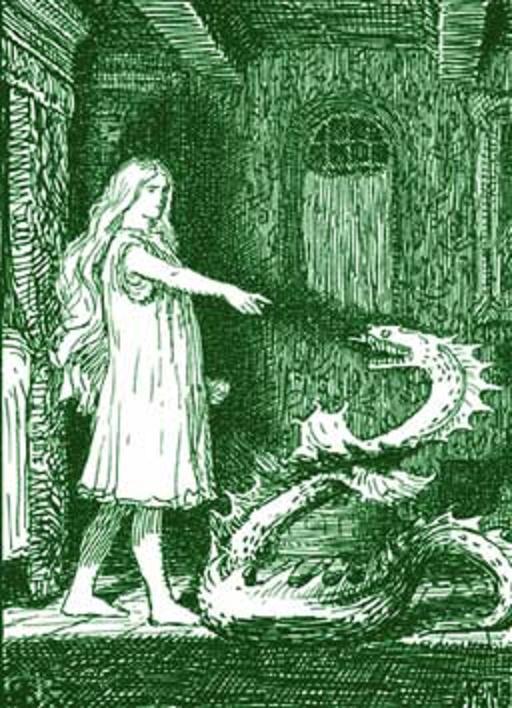
This time I wanted to describe the Norwegian folktale about Prince Lindworm
(which can you read HERE) which, in my opinion, is the most accurate summary of
Kylo/Ben & Rey relationship. First, I will discuss a theoretical framework
and concepts that I will need to conduct proper analysis of the parallels between
TFA and “Prince Lindworm”. But don’t get discouraged! Throughout this essay I will
continuously get back to the movie.
Wonderful meta about this very romantic folktale and the characters and themes of the sequel trilogy. Next to this all the Beauty and the Beast comparisons seem almost shallow.
Thank you @ewa-a-nie-chce-spac for your encouragement and @shadowlass for inspiration 🙂 I’ve been thinking about writing this post for a year, but recently few things happened that motivated me to do it:
Finally I had a chance to watch “Beauty and the Beast”. Well, I saw the animated version before but watching the new one only made me realize why I disagree so strongly with the conclusions of this fairytale. I was never a fan of this theory which highlights the parallels between Kylo and the Beast. Of course, there is some similarity in the outer layer and symbolism but the core of the story is totally different: while Beast is a proud and vain man and so his task in the story is to learn how to love another human being, Kylo is full of self-hatred and doubt and his main goal in this trilogy is learn how to love himself.
What is more, there are many fairytales that reflect more accurately the main motives visible in the Force Awakens. The two that, in my opinion, are the most fitting here are “Snow Queen” and “Prince Lindworm”. But let me say this: since I’ve become a part of this fandom I admired all those talented people who were creating amazing stores, drawing beautiful fanarts and those who put their extensive knowledge (from fabulously varied fields!) into use, writing metas. I also wanted to contribute and share those bits and pieces that I’ve collected during my studies. I decided to divide this post into two parts: the first one will be about the Snow Queen and I will discuss the similarities between the fairytale and TFA on the level of the plot and its symbolism. This one will be more like a summary. In the second part I will write about Prince Lindwom and more psychological stuff, like trauma, dissociation and archetypal defenses of personal spirit. However, I will focus on Kylo’s relation with Snoke in both parts, because I feel that there are still some things that need to be said.
I believe someone has already done a meta on this – I remember reading it and really enjoying it. If someone has a link, please do provide it! I tried a search but came up with nothing.
But you’re right, there are certainly some interesting similarities.
Before reading this, be aware that my speculations/predictions/head canons of the trajectory of TLJ are HERE, and that post greatly informs my discussion below.
The Snow Queen – Synopsis:
Kai –a young boy –is first tempted by the Snow Queen through (I believe) a vision in a mirror or the window (I cannot remember which). He is at first TERRIFIED by his vision of her and does his best to resist in horror (you can already see the parallel with Kylo and Snoke, who preyed on Kylo from his childhood by plaguing his thoughts and likely appearing in visions).
A part of this tale includes some ancient, enchanted mirror created by demons/trolls (or some other kind of sinister monster). This mirror, which shows only the negative and horrible aspects of the world, has shattered in the wind long ago, and the wind blows the shards about. The shards often get lodged into people’s hearts, and – as one would expect – one of these shards somehow gets lodged into Kai’s heart. This creates a negative attitude and perspective on the world for Kai, who now sees the world as ugly and terrifying, and he begins doing terrible things to those he loves. He even betrays his grandmother by destroying her garden, I believe.
This draws him to find that the only beautiful thing left in the world is snow (Starkiller comes to mind, doesn’t it, with the image of snowflakes flying around). He is drawn to the beauty of flakes of snow, and eventually the Snow Queen herself, who kisses him and makes him forget about Gerda – his lifelong, dear friend – and his entire family.
Everyone believes Kai to be dead – a lost cause – but NOT Gerda! Gerda believes she can figure out what happened to her beloved friend. She goes searching in the bitter cold for him. It is important to note that at one point, Gerda loses her memory of Kai by a sorceress who captures and wants to keep Gerda – the sorceress erases her memory of Kai. But Gerda eventually is able to remember Kai on her own, and is able to escape and continue her journey to find her friend.
Gerda eventually comes across a thief and a reindeer, and is able to travel to the Snow Queen’s palace via reindeer. Along the way, Gerda meets a woman (I believe she is described as a Finn woman, I shit you not!) who tells her that her kindness within her heart is what will save Kai. The power already lies within Gerda to save Kai from the Snow Queen’s spell and dislodge the cold mirror’s shards from his heart.
When Gerda arrives at the palace, she finds Kai and kisses him, and he is released from the Snow Queen’s spell. As Gerda weeps for Kai out of love because he has returned, the shards in Kai’s heart, too, melt away. As the two happily reunite, the shards from within Kai’s heart begin to dance around them and spell out the word “eternity.”
This is an obvious coming of age tale. The two return home afterward completely changed, with a realization they’ve “grown up” together.
Discussing the Potential Parallels:
I wouldn’t be surprised if some of this story was inspiration for Kylo and Rey, at all, and it’s been my thinking there’s some definite influence, along with Beauty and the Beast.
Most of note to me is the nature of the evil enchanter in both Snoke and the Snow Queen – this idea of seduction and manipulation, as well as the intentional separation of the boy from family and those he loves.
Interestingly, I think in both the case of Kai and Kylo Ren, we have an outside force influencing the boy’s perception of the world before complete seduction (although it is clear the boy is targeted by his respective enchanter before complete seduction takes place). For Kai, it is the shards of the horrible mirror that pierce his heart; for Kylo it is the Dark Side of the Force.
Though the evil enchanters take advantage of the boys’ weaknesses in both cases, it is not the power of the enchanter itself that starts the change of heart – they are just a predator taking advantage when the time is right. It is the darkness and ugliness of the world that begins to change the boy’s heart, first. Then, the enchanters happen to find the boys in both cases (now cue Snoke saying, “when I found you….”), and from their weakest, most vulnerable state, the evil enchanters seduce the boys into their spell, hardening their hearts and depriving them of love and warmth and light.
Another interesting thought is that Gerda and Kai both knew each other well in their youth, but also lost memory of each other at different points. I don’t know if they’ll make it so literal for Rey and Kylo, to the extent that they’ll have actually known one another.
But it’d be interesting if there is some sort of grand connection between them that was already in place from beginning, but that has also been tampered with or prevented somehow between Snoke and Luke.
Which brings us to Luke. In The Snow Queen, there is a sorceress who wants Gerda to stay with her, and the sorceress wipes Gerda’s memory clean of Kai at one point. Although I don’t see Luke exactly wiping Rey’s memory clean of Kylo Ren, I do see him wanting to stop her from joining Kylo at ALL costs, and trying to manipulate her to trust in him (in what he sees as a noble cause to balance the Force and destroy the Dark Side).
It very well may be that both Luke AND Snoke know the nature of Rey and Kylo’s connection to the Force and each other, but both parties want to conceal that connection from Rey and Kylo/Ben for their own purposes.
Here, in The Snow Queen, we also have a story in which Love Redeems, through romantic love, after family has given up the fight in searching for and saving their boy. The girl, through the kindness and light of her heart – and through sheer determination in KNOWING she can find the boy – is able to release him from his spell, as well as pull from his heart the dark shards that have overtaken it. Through Gerda’s hope and love and determined spirit, she is able to help Kai back to his old self – a self which he had forgotten along the way. He goes back to being kind and caring and full of warmth and light. Both of them are older and wiser by the end of the story.
Another note in this story is Kai’s appearance. He is described as looking (I believe) cold and dead throughout his time trapped with the Snow Queen. It is through Gerda that he comes back to his old self. When Gerda comes back to him and releases him from his spell, he returns with bright face and warm cheeks.
When I think of Kylo Ren/Ben in TLJ, he looks miserable, tired, and sad. When I think of this persona he has adopted – the name Kylo Ren – it reminds me that there is an “old self” he can return to: Ben Solo. Notice that, in the end of the trailer when Kylo/Ben is seemingly reaching out to Rey, he is surrounded by a warm glow and cascading embers… I can’t help but associate Kai’s transformation via Gerda with Kylo’s potential transformation through Rey. It does make me think we’ll be potentially calling him “Ben” again by the end of TLJ.
Continuing on, these are both coming of age tales – that is an obvious connection between the Star Wars saga and The Snow Queen. And, in addition to that, the interesting parallel that we have a young girl coming to rescue the boy from an evil enchanter….? Well, I’ve pointed this out MANY times before, but yes – I believe that’s the kind of story we have on our hands between Rey and Kylo/Ben.
In fact, Beauty and the Beast is very similar in this regard, and it’s why I’ve made those comparisons before, too.
Some of My TLJ Speculations:
A lot of people think that Kylo is going to remain fairly “edgy” and teeter heavily on the edge of Dark and Light – but mostly stay on the side of the Dark. All the while, Rey will stay pretty bitter and wary of him throughout the majority of TLJ – RIGHT up until the VERY end. @reylorabbittrail and I have discussed this (I’ll reply to you in a bit! Sorry!!), so tagging her for commentary if she’d like!
However, my opinion is different than most, and more hopeful perhaps (are we surprised??)
I actually think Rey will begin to turn her feelings sooner than some expect – after their saber fight on Ahch-To. When I look at others’ analyses, it seems that a lot of people look at Kylo and Rey and see Pride and Prejudice – and that’s certainly not a wrong comparison at all, considering the auditions for Kylo Ren (which are essentially confirmed to have used an excerpt from Pride and Prejudice). Many think Rey will despise Kylo right up until the last possible moment, and turn her feelings unexpectedly, despite herself – just as we see in P&P. Many also think she’ll be pursuing Kylo at the end of TLJ because she’ll still believe him to be on the side of evil after being returned somehow to the First Order. Kylo will then either surprise her with a secret plan he had, but that he neglected to tell her (like Darcy), or that he’ll have a last minute change of heart and do the right thing, which will earn Rey’s trust.
While I do think it’s possible Kylo’s arc could carry out in the above way… I actually don’t think it will go exactly like this for Rey. I don’t think she’ll hate him right up until the end. I think she’ll realize halfway that she needs him as a teacher, and that she has misunderstood him – that there is still hope for Kylo. And there’s a particular reason why:
Star Wars is first and foremost a fairy tale.
It’s not a story set in our real world (like Pride and Prejudice).
At its core, SW is a fairy tale and a story of adolescence, and I believe we will be seeing the dynamic of the fairy tale progression for these characters, like that of Kai and Gerda from The Snow Queen, or Belle and the Beast from Beauty and the Beast. The archetypes/narratives of a fairy tale are slightly different than that of a pure romance such as P&P.
The dynamic of a fairy tale implies that the two will slowly come to a mutual understanding, rather than simply be at odds the entire time, and that they will have deep affection for each other. Their affection is what guides and pushes them further on their journey – it is not HATRED and MALICE which pushes them forward, nor being at ODDS with each other. No, this is a fairy tale. It is LOVE and HOPE and COMPASSION which needs to drive our heroes forward.
This dynamic implies that there is only ONE person – in this case the young girl – who has hope left for the lost, enchanted boy… The boy whose perception turned dark and dreary due to his evil enchantment. Only ONE can save him from his dark spell….
Rey will be the last one left with hope for Ben Solo. His uncle, even his mother, may have given up on him by that point. But it is REY who will journey across the galaxy and PLEAD with his mother to still fight for the light left in him. They MUST rescue him, bring him back! For, by that point in the story, Kylo/Ben will have been on Ahch-To with Rey, and she will have seen that last bit of light left in him.
But then, what happens from there? Wouldn’t that mean that TLJ ends the story? Well… no. Because we still have Rey’s journey to complete….
And so, the subversion of this, likely, will be that once the boy (Kylo) is saved, Rey will face the same tests and trialsin Episode 9 as Kylo. Snoke will likely turn his attention to REY, and Luke will probably be pursuing them both to stop them working together (seeing them as a threat to all of humanity and the galaxy in their overwhelming, raw powers combined – harbinger of death type stuff [thanks to Knights Of Rant Podcast for that theory!!]). Now that Kylo has gone through this intense journey with Rey’s help, and come back the other side through Rey’s light, the tables will turn and it will be HIS turn to help out Rey.
So, that is a VERY ROUGH outline of how I view these two stories bearing possible similarities, and why I believe it’s important to understand that Star Wars is first and foremost a fairy tale.
I could be wrong, and perhaps they are taking less of the fairy tale approach, and putting in a more tenuous relationship between Rey and Kylo – so that she IS questioning him right up until the end.
But I can only speculate on what patterns I personally see appearing in the literature that I know well… and for me, it seems more consistent with the fairy tale elements and the themes of adolescence to have it progress in this manner. For Rey to be shunned by everyone EXCEPT Kylo/Ben, that is going to make a HUGE impression on her. Whether Kylo is an asshole or not (he is), the very fact that he will not be terrified of her power, that he will admire that about her, is going to affect her deeply.
I don’t think we’re going to see a light and happy-go-lucky Rey by any means. But I do think she’ll be the last one to carry hope for Kylo/Ben, and that is what will prompt her to leave Luke behind and seek out Kylo. Because, through that, she will see that he **IS** in fact supposed to become her teacher in the Force. Because he is the only one who can truly understand what she is going through, she will seek him out for his help.
The more I read about the parallels between The Snow Queen and the sequel trilogy the more I believe the creators borrowed heavily and intentionally from this classic fairy tale.
La Belle et la Bête (1946) is a classic film with beautiful imagery. Here I will compare some of the scenes/imagery of this film with the Takodana “bridal carry” and interrogation scene.
There are a number of people who go on about the “bridal carry” being instead a “monster carry” reminiscent of monster movies or horror films. While I won’t deny there may be some influence there… I think the below images may change some perspective on that, too.
I’ve seen claims that there areno instances in cinematic history of a woman being unconscious and carried in a manner that could imply future romance…
I’ve seen people imply there is NO WAY JJ inserted Beauty and the Beast parallels in the scenes between Kylo and Rey…
However… ladies, and gents, and people of all genders, I give you:
the Beauty and the Beast Bridal Carry
Note the unconscious Belle and Rey. Compare Belle’s posture with that of Rey’s. Note the way in which the Beast and Kylo carry their respective maidens.
Even the hand-picked promotional art seems to support the romantic imagery of this scene. I can’t believe that is coincidence, especially now looking closely at La Belle et la Bête and comparing the two.
(Artist of the above LucasFilm licensed image: Erik Maell)




 Monsters and Villains